
 EN
Quam cito cylindri typi manicae pro placis minuunt tempus mutationis operis in machina tua pro imprimendo sacculis textis?
A production manager asking this question usually wants one number. A responsible answer is more useful: a sleeve-type plate-cylinder arrangement can remove handling steps from a changeover on a machina imprimendi sacculorum textilium , but no credible fixed number applies before the job is defined. Repeat length, plate mounting practice, artwork, ink preparation, web behavior, registration targets, and the team’s release process all shape the elapsed time.
Pro machina imprimendi sacculorum textilium , the practical comparison is not “sleeves versus cylinders” in isolation. It is the time from the last acceptable bag of one order to the first approved bag of the next. That window includes preparation, tooling exchange, setup checks, registration, tension stabilization, color adjustment, and first-off inspection. Looking at all of those steps prevents a fast physical swap from being mistaken for a finished changeover.
Start with the right definition of changeover time
Before evaluating a Sleeve-Type woven bag printing machine , note where the clock begins and ends. One facility may start timing when the prior roll concludes; another may begin only after the next substrate has already been positioned. One team may stop timing once plates are installed; another may wait until an approved sample is formally signed off. Both measurements can be valuable, yet they are not equivalent.
Pro machina imprimendi sacculorum textilium , divide the process into observable phases:
- Prepare the upcoming job: verify substrate, artwork, inks, repeat length, and operating instructions.
- Remove or replace the current plate-cylinder or sleeve tooling.
- Set the next repeat length and confirm mechanical fit.
- Thread and stabilize the web under intended job conditions.
- Adjust colors and registration to fall within the agreed inspection window.
- Produce and approve the first acceptable sample.
A sleeve may ease the handling load during the second phase. It does not inherently shorten every other phase on a machina imprimendi sacculorum textilium .
Where sleeve-type plate cylinders can assist
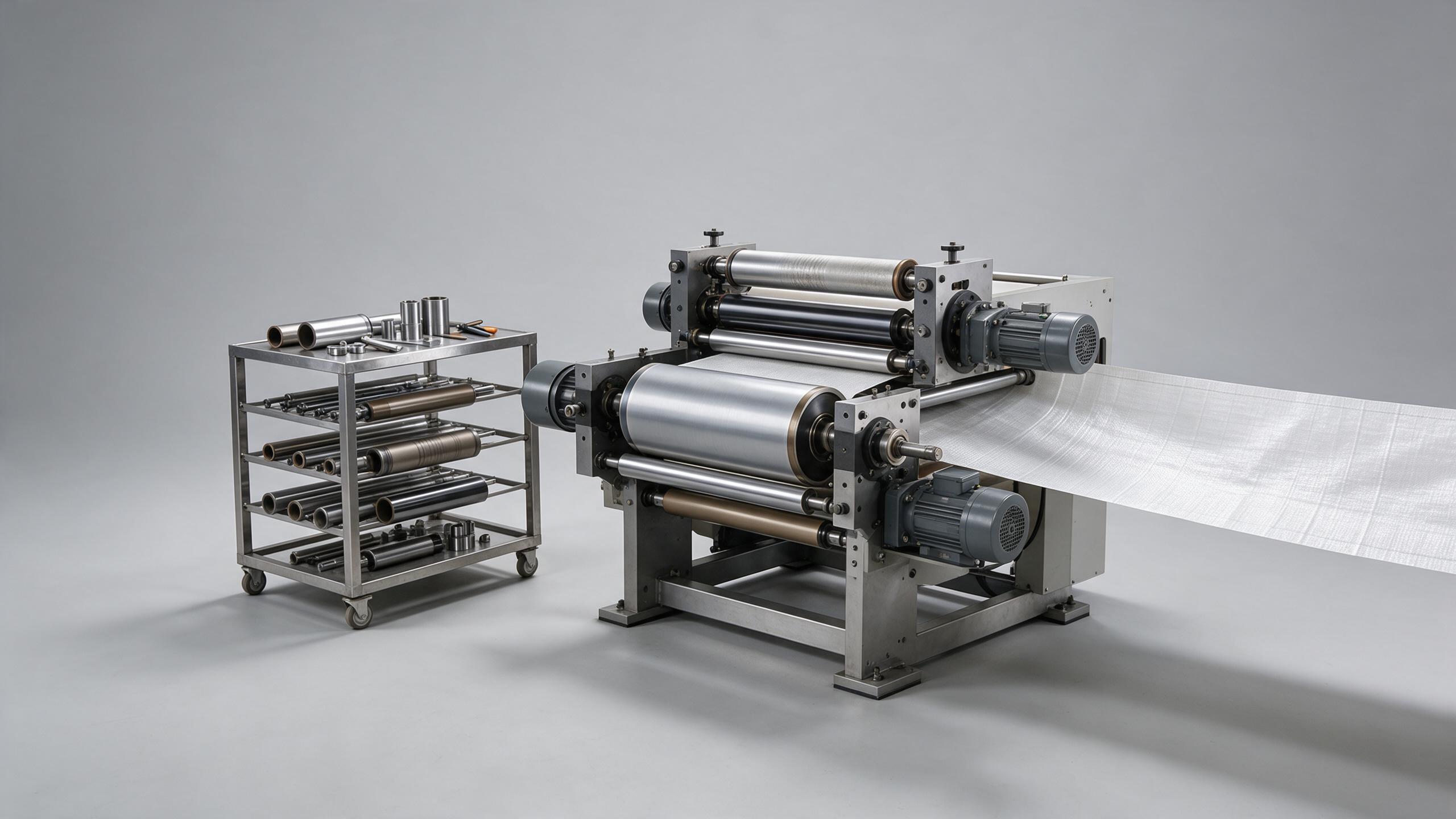
The appeal of sleeve tooling is practical: when the next sleeve, plate, and job documentation are prepared correctly, the operator can focus on exchanging the print-form assembly rather than rebuilding a setup from scattered components. On a machina imprimendi sacculorum textilium that changes repeats or designs frequently, this may simplify the physical part of the job handoff.
That is especially relevant when job variety is high. A Quick Changeover PP Woven Sack Printer should be evaluated against the actual mix of repeat lengths, color counts, and bag constructions—not against a headline promise. If the same few jobs run for long periods, tooling exchange may be a smaller share of total production time. If a plant switches designs often, disciplined staging and clear sleeve identification can become more important.
The possible advantage is therefore conditional. A sleeve system can make a changeover easier to standardize, but it still requires a compatible press design, suitable tooling, trained operators, and an approved method for checking repeat and registration.
Why the plate swap is not the whole answer
It is tempting to treat this as a speed question; more accurately, it is a speed-and-stability question under the intended bag-printing conditions. A machina imprimendi sacculorum textilium may lose time after the sleeve is installed if the incoming web behaves differently, the job has tighter registration expectations, or the next design needs more color balancing.
Tessellated substrata can render this distinction significant. Material particulars, print coverage, ink system, web trajectory, and tension configurations must be verified for the specific assignment. A registration correction may also influence web tension; thus, the objective is not merely to attain register once. The objective is to institute a stable run capable of passing the plant’s inspection procedure without recurrent adjustment.
For that reason, a comparison ought to encompass setup waste, operator intervention, and repeatability alongside elapsed minutes. These are operational queries, not universal performance assertions regarding a machina imprimendi sacculorum textilium .
A pragmatic test for your woven bag printing apparatus
If you are evaluating a sleeve-type methodology, employ comparable live assignments rather than suppositions. Select representative orders differing in repeat length, artwork intricacy, substrate, and number of colors. Maintain consistency in the timing protocol. Document each phase from job preparation through approved first-off, plus any material consumed during setup.
| Punctum Inspectum | Quid Registrandum Est | Cur interest |
|---|---|---|
| Job preparation | Disponibilitas manicas, placas, inks, et instructiones | Monstrat utrum dilationes ante contactum pressae occurrant. |
| Exchangementum instrumentorum | Remotio, applicatio, et inspectiones identificationis securae | Isolat partem quam systema manicarum destinatum est ad efficiendam. |
| Constitutio web et tensionis | Adjustationes necessariae ante cursus stabilem | Connectit performancem changeover ad verum materiale textum. |
| Registratio et color | Numerus et causa correctionum | Impedit ut permutatio celeris latet lente procedentem approbationem. |
| Prima approbatio | Tempus ad acceptationem specimen convenit | Notat punctum ubi opus iam commerzialiter utile est. |
Utere eandem tabulam inspectionis pro praesenti ordinatione et pro propositione Sleeve-Type woven bag printing machine . Hoc resultatum non creabit normam generalem, sed ostendet num mutatio instrumentorum sit obstaculum reale in tuo ipso cursu operis.
Quaestiones quae ante petitionem configurationis resolvendae sunt
Disputatio cum suppeditatore de machina imprimendi sacculorum textilium efficacior est cum turma productiva facta praebet quae consilium mutant. Inclue materiam sacci, latitudinem web, ambitum repetitionis, numerum colorum typicum, amplitudinem artis, exigentias inchi et siccationis, frequentiam mutationis operis, seriem currentem mutationis, criteria acceptationis, et opera operatoris quae plus temporis consumunt.
Interroga quae elementa propositionis includantur, quae condiciones probandae sint, et quae tractatio vel cura a turma necessaria sit. Fortasse haec via recta est, sed responsum pendet ex materialibus, cursu operis, et ambitu configurationis confirmatis.
Usus decisionis de cursu operis, non numeri in titulo
Pro machina imprimendi sacculorum textilium , cylindri laminarum typi manicae investigandae forsan sunt, ubi mutationes frequens repetitae operationis aut designi instrumentorum tractationem in impedimentum recurrens vertunt. Non debent praesentari ut promissum praefinitum de reductione temporis particulari. Fortior ratio negotii ex testu documentato ante et post oritur, quod praeparationem, substitutionem, stabilisationem, approbationem, perditam materiam, et laborem complectitur.
Ad latiorem applicationis contextum, vide directiva de machina imprimendi sacculos textos . Machinae Wenzhou Qiangtuo possunt tuae occupationis particulas adhibere ad formulandas quaestiones pertinentes de configuratione, dum tamen idoneitas finalis adhuc confirmanda est secundum condiciones productionis propositas.
 Nuntii Calidi