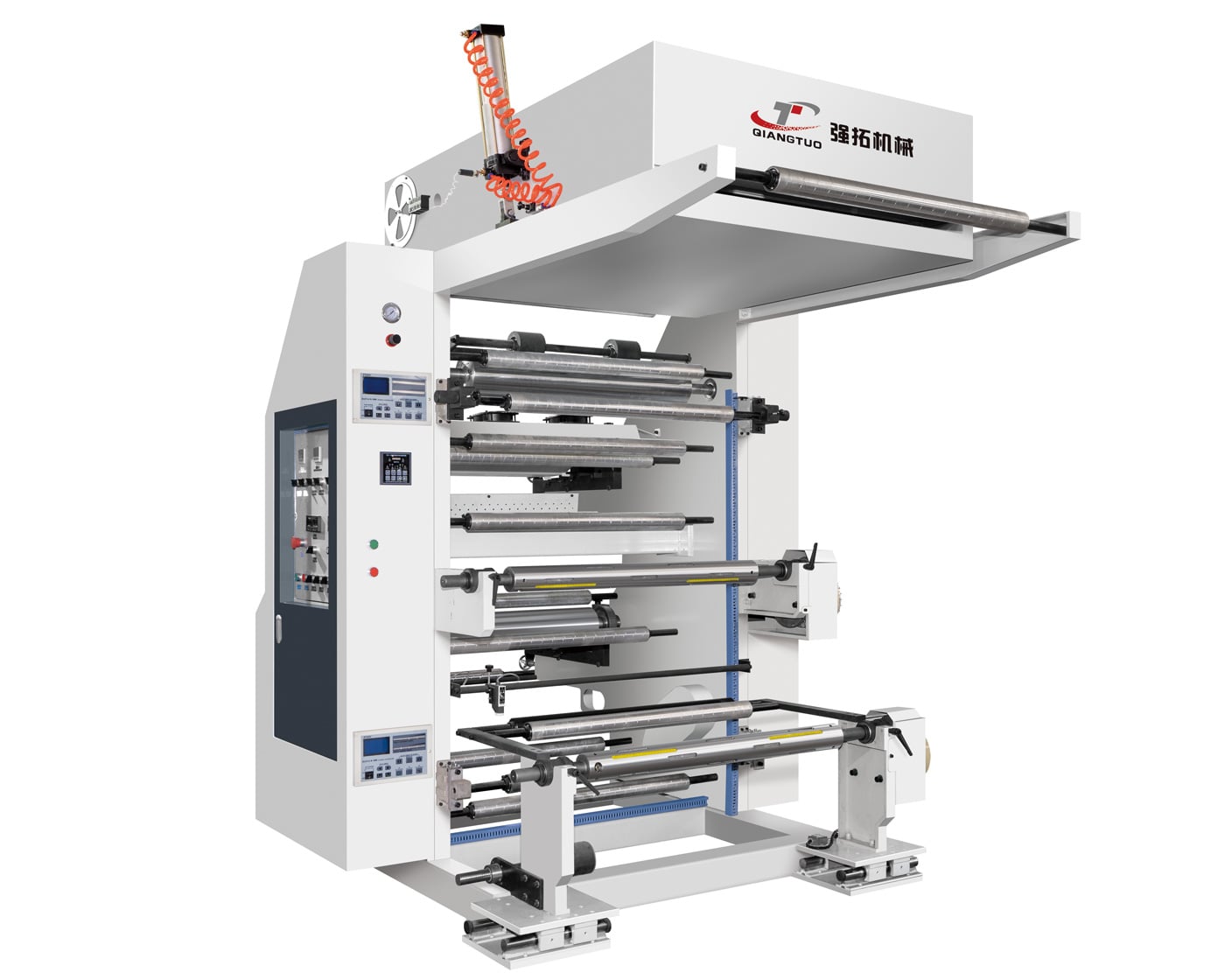
Customs data sketches two features of China's printing equipment exports: stable totals, shifting structure. According to Keyin Industry Research based on China Customs statistics, in January–February 2026 the combined import and export value of domestic printing equipment was USD 1.055 billion, of which printing equipment exports were USD 471 million and pre-press equipment exports USD 43.2139 million, up 30% year on year (via CAGST, 2026-04-09). Pre-press growth typically precedes press demand — it signals that overseas customers are preparing new capacity.
In H1 2025, China's combined imports and exports of printed matter, printing equipment and printing materials reached USD 12.083 billion, up 1%, with exports of USD 9.682 billion (China Customs data, via HK Printers' Chamber HKPM No. 164). Totals are nearly flat, but the divergence between pre-press and press growth indicates overseas investment moving from "completing the supporting line" to "building new lines". For flexo press builders this is a window that can be prepared for in advance: pre-press purchasing usually leads press purchasing by several quarters.
Middle East (Turkey, Saudi Arabia): packaging demand is expected to grow 5–6% annually, with strong potential in corrugated board, folding cartons, food containers and green packaging; local manufacturers are accelerating automation and green retrofits and actively importing advanced equipment. This market prefers high automation and complete lines delivered in one package; service radius and local spare-parts stock decide the outcome.
Southeast Asia: absorbing flexible and paper packaging capacity transfer, dominated by export-oriented converters that demand stable continuous running and fast job changes, and weigh payback period heavily. China's paper packaging container exports are projected at USD 15 billion in 2026, flowing mainly to Southeast Asia, Europe and North America (inwwin.com.cn, 2026-10-20) — corroborating continued processing-capacity expansion in the region.
Africa and Latin America: dominated by greenfield plants and first-machine purchases, where grid stability, maintenance capability and operator training are the binding constraints. Semi-servo and structurally simple presses are more readily accepted, and remote guidance plus standardised spare-parts kits carry outsized value.
First, compliance documentation: CE and technical files, material declarations, and an understanding of EU customers' PPWR requirements. Second, localised service: installation and commissioning cycles, training and spare-parts supply speed directly determine repeat orders. Third, proof-by-sample capability: overseas customers increasingly ship their own materials and require pre-shipment proofing rather than ordering from a parameter sheet alone. All three are capabilities of manufacturers, not traders.
 Hot News
2025-06-14
2025-06-15
2025-06-16

 EN